




Contact lenses
Night lenses for myopia in Imperia
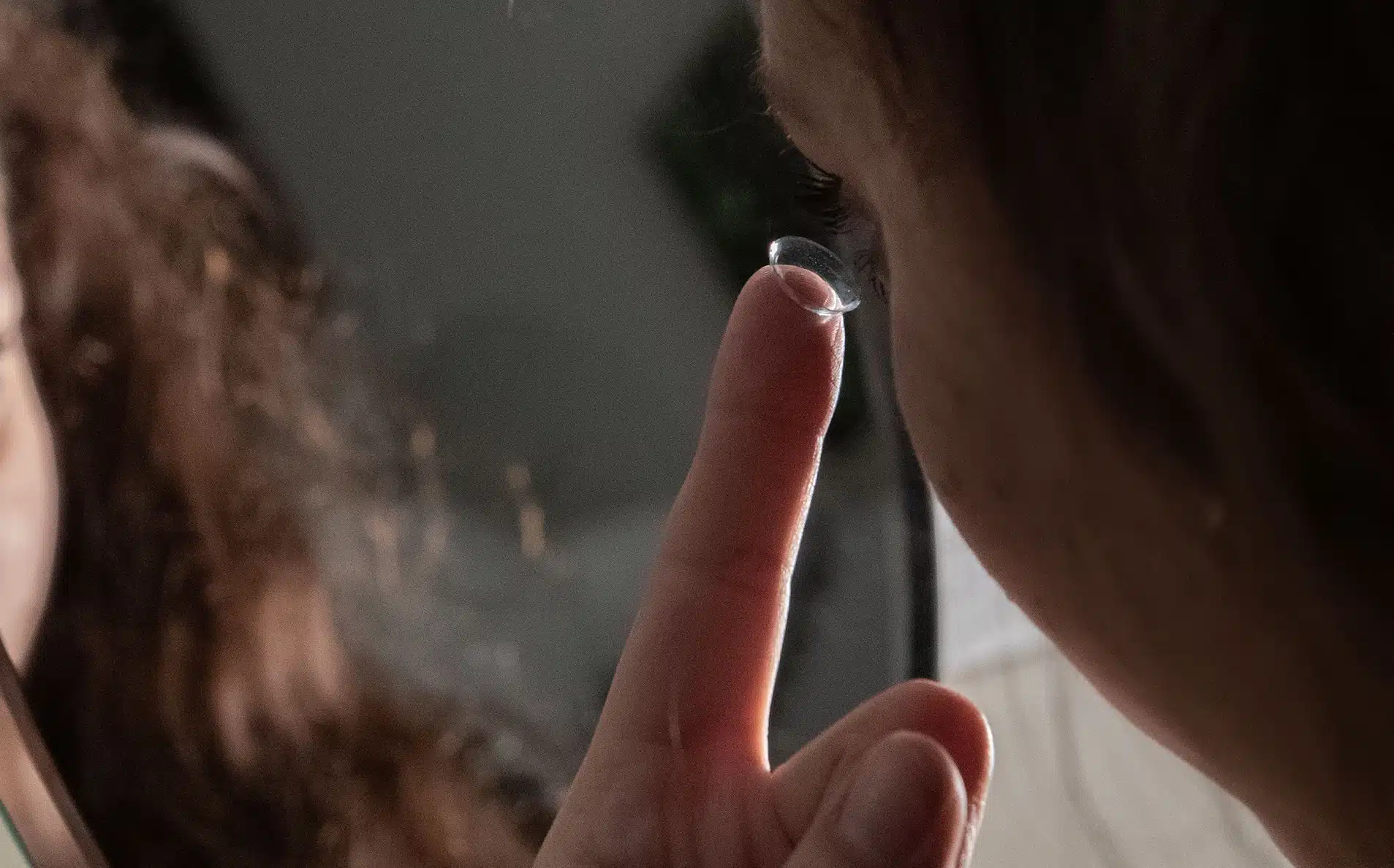
Put them in at night, take them out in the morning. And no glasses during the day.
Training in the morning without glasses slipping down. Spending the day at the office without thinking about lenses. Taking a dip in the sea and seeing the shore clearly.
Night lenses are gas permeable contact lenses that you wear while you sleep. Overnight they gently reshape the surface of the eye, in the morning you take them out and face the day seeing well, without glasses or lenses1, 3.
With us you find out whether they're right for you, starting from the corneal map of your eye.
Audagna & Barletta
Opticians and optometrists in Imperia since 1972
The lenses
What are night lenses
They are also called orthokeratology lenses, or Ortho-K. They are gas permeable lenses, designed to temporarily change the shape of the cornea, the clear part at the front of the eye1, 2.
They are used mainly for myopia1, 2.
They are made-to-measure lenses. Each pair is based on the shape of your eye, which is why they are not the same for everyone and can't be bought off the shelf.
While you sleep
How do night lenses for myopia work?

In the evening you put the lenses in with your face clean and free of make-up. While you sleep, they flatten the centre of the cornea and change the way light enters the eye1. When you wake up you take them out, even before washing, and the cornea keeps its new shape for the whole day.
The full result doesn't come after the first night. According to the American Academy of Ophthalmology it can take two weeks or more1.
The effect is temporary and reversible. To maintain it, the lenses are worn every night, or on the schedule we give you2, 3. If you stop, within 48-72 hours the cornea returns to its previous shape, and the myopia comes back with it1.
In the morning
The day is yours

That's the beauty of night lenses. They do their work while you sleep.
You'll like them if you do sport, swimming, the gym or running, and glasses get in your way. If you work in a kitchen, where steam from the pans fogs up your glasses. If you spend your days amid dust, wind or air conditioning and contact lenses tire you. If you simply want to wake up and go out, without a care.
Myopia
Do night lenses slow down myopia?
According to the American Academy of Ophthalmology, night lenses can slow the increase in myopia during the growing years5.
Scientific publications and meta-analyses (widely available online) confirm that orthokeratology slows the elongation of the eye, which is the cause of the increase in myopia. Orthokeratology is the optical system with the highest success in containing myopia progression6.
We assess together, after the corneal map, whether they could be the right path for you.
Find out more on the page Children's eyesight and myopia.
With us
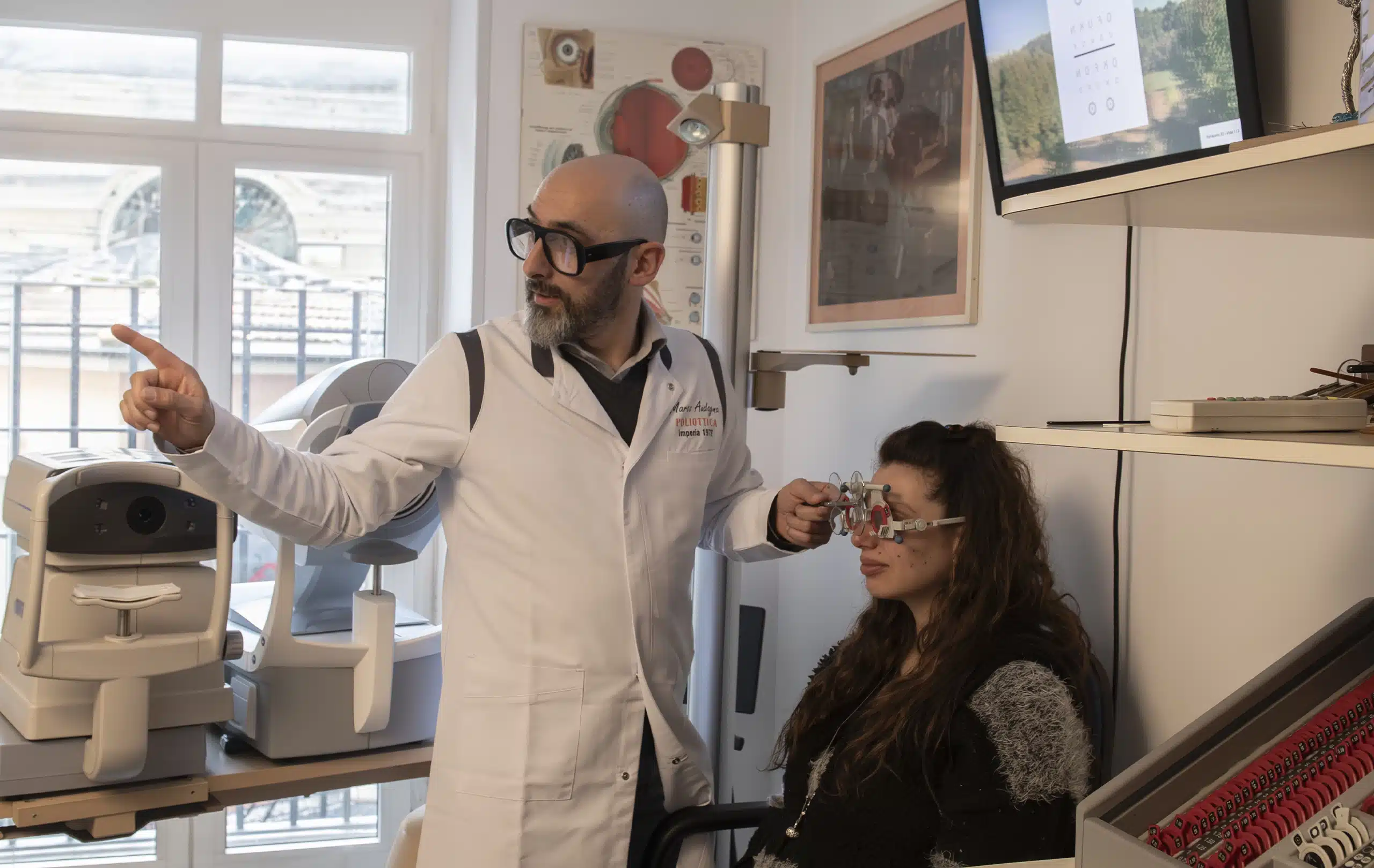
How we find out if they're right for you

Night lenses are not suitable for every eye. That's why we always start with a free assessment, carried out by us, opticians and optometrists in Imperia for more than fifty years.
- Eye testTo get to know your myopia and your habits.
- Corneal mapIt charts the shape of your cornea point by point. It is the basis on which the lens is built.
- Trial and collectionWith instructions on putting them in, taking them out and cleaning them, until it comes naturally.
At first we see you a few more times, to follow how your eye adapts. After that the check-up is every six months, always, even when everything is fine, and you don't pay for it.
The lenses last a year. When you replace them, at the end of the year or earlier if you break or lose one, the new ones cost half the price of your first final lenses.
Every night
Safely, every night
Like all contact lenses, night lenses need care too. The American Academy of Ophthalmology points out that night lenses increase the risk of infection, which is why hygiene matters every evening1.
When you collect them, we explain all the rules to you, one by one.
- Hands washed and dried before touching the lenses.
- Never water, not even tap water, on lenses or case. Only the recommended solution4.
- A new case at least every three months4.
- A check-up every six months, without skipping it.
- If your eye turns red or hurts, take the lenses out and call us.
Frequently asked questions
Your most common questions
What are orthokeratology lenses?
They are night lenses. Orthokeratology is the technical name, Ortho-K the English abbreviation.
Do night lenses work?
They are made precisely to correct myopia1, 2. Overnight they flatten the centre of the cornea, and during the day you see without glasses or lenses1, 3. We find out with the assessment whether your eye is suitable.
How many hours should I wear night lenses?
On the first night it's best to wear them for 8 to 10 hours, then at least 6 hours every night7, 8. You put them in 15-20 minutes before going to sleep7, and at the first check-ups we see together whether the timing is right for your eye.
How many days does it take to see well with night lenses?
If you sleep in night lenses for the recommended number of hours, you often see well after just two or three nights9. The best result takes more days. Manufacturers indicate from 7-10 nights to three weeks8, 9, and according to the American Academy of Ophthalmology it can take two weeks or more1. Every eye has its own pace, and we follow it with you at the check-ups.
If I wake up during the night, can I see?
Yes, the lenses are also calculated so that you can see while wearing them, and we check this when you collect them.
How much do night lenses for myopia cost?
The price depends on the parameters of your eye and can vary considerably from one person to another. That's why we give you a quote in the shop, after the assessment. The eye test, corneal map and follow-up check-ups are free, you only pay for the lenses, trial and final. When you replace them, at the end of the year or earlier if you break or lose one, the new ones cost half the price of your first final lenses.
How long does the effect last?
All day. To maintain it, you wear the lenses every night, or on the schedule we give you2, 3. If you stop, the cornea returns to how it was within 48-72 hours1.
How often are night lenses replaced?
They are replaced after a year, or earlier if you break or lose one. The check-up, on the other hand, is every six months.
What are the pros and cons of night lenses?
The biggest advantage is freedom during the day, without glasses or lenses3, including in sport and in the water. The effect is reversible. If you stop one day, the eye returns to how it was1. In return they require consistency. They must be worn every night or on the schedule we give you2, with lens care before bed and a check-up every six months.
Are there any risks or contraindications?
The main risk is infection of the cornea, which according to the American Academy of Ophthalmology increases with night lenses1. That's why hygiene and check-ups matter. And not every eye is suitable. We look for contraindications during the assessment, before starting.
Are they also suitable for astigmatism, hypermetropia or presbyopia?
They are used mainly for myopia1, 2. For other cases it depends on your eye and the lens, and we assess it together.
Can you buy night lenses online?
No. They are made-to-measure lenses, built on the map of your cornea, and they need to be followed up over time by whoever fits them for you.
Where can I get night lenses in Imperia?
With us, at Via Silvio Bonfante 8, 18100 Imperia Oneglia. In the online booking calendar choose Prima applicazione lenti a contatto (first contact lens fitting) and in the notes write that you're interested in night lenses.
Sources
1 American Academy of Ophthalmology, What Is Orthokeratology?, 23 April 2023.
2 U.S. Food and Drug Administration, Types of Contact Lenses, 16 January 2018.
3 American Optometric Association, Doctors of Optometry in the Management of Myopia, May 2019.
4 Centers for Disease Control and Prevention, Preventing Eye Infections When Wearing Contacts, 27 May 2025.
5 American Academy of Ophthalmology, Ophthalmic Technology Assessment, Use of Orthokeratology for the Prevention of Myopic Progression in Children, 2019.
6 Lawrenson et al., Interventions for myopia control in children, Cochrane Database of Systematic Reviews, 13 February 2025.
7 Johnson & Johnson Vision, ACUVUE Abiliti Overnight, Package Insert and Fitting Guide, January 2023.
8 Precilens, Orthokeratology, DRL night lenses, accessed 11 November 2026.
9 Menicon, Menicon Z Night, instructions for use, 2022.
Explore